Short answer:
- A plasma power supply is a high frequency, high voltage system that generates and sustains plasma for research, testing, and material processing applications.
- These systems are used by universities, testing laboratories, and manufacturers across New York for work such as dielectric barrier discharge testing and surface treatment research.
- Output specifications vary by application, with frequency and voltage ranges tailored to the specific plasma process being studied or performed.
A plasma power supply converts standard input power into the high frequency, high voltage output needed to initiate and maintain an electrical plasma discharge, a function central to material science, semiconductor research, and industrial testing. Laboratories and manufacturers searching for a plasma Power supply in New York are typically working on projects that require precise control over output frequency and voltage rather than a one-size-fits-all power source. New York’s research institutions and manufacturing base have driven demand for equipment that can be configured to match narrow technical requirements rather than generic lab power needs.
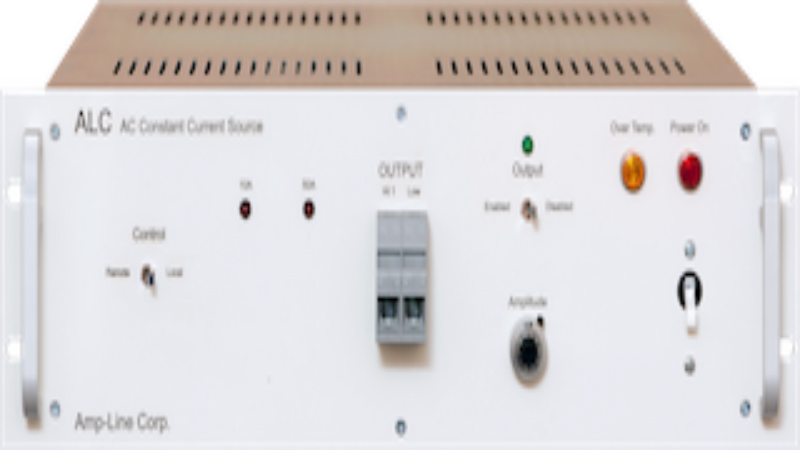
Amp-Line Corp. designs and builds plasma power supply systems as one of its core product lines, operating out of West Nyack, New York. The company’s plasma equipment is built around high frequency power amplifiers paired with high frequency, high voltage transformers that together generate the signal needed to produce plasma.
What Plasma Power Supply Systems Actually Do
Plasma power supplies are not general purpose electrical equipment. They are purpose built to deliver a specific combination of frequency and voltage that varies by application.
- Output frequency can range from hundreds of hertz to tens of kilohertz depending on the process.
- Output voltage can reach into the thousands of volts rms, depending on the transformer and amplifier pairing used.
- A common end use is dielectric barrier discharge testing, a method widely referenced in plasma materials research.
Recent peer reviewed research continues to validate dielectric barrier discharge as a foundational technique in modern plasma science. A 2025 study published in the journal Materials notes that plasma technologies have evolved from niche applications into a cornerstone of modern material engineering, with dielectric barrier discharges enabling modification of surface properties without affecting the bulk characteristics of materials. This underscores why laboratories value power supplies that can be matched precisely to a given discharge configuration rather than run off a single standardized unit.
Industries That Rely on This Technology in New York
New York hosts a dense concentration of universities, national laboratories, and advanced manufacturing operations, many of which require plasma generation equipment for research and quality testing.
- Academic and research institutions use plasma power systems for coursework and funded research projects involving surface science and materials testing.
- Testing laboratories apply dielectric barrier discharge setups to evaluate material properties under controlled plasma exposure.
- Government and national research organizations incorporate plasma equipment into broader experimental programs involving high voltage and high frequency systems.
- Manufacturing facilities use related high frequency, high voltage equipment for process development tied to surface treatment or deposition work.
Matching Equipment Specifications to Application Needs
Because plasma generation requirements differ by project, output configurations are typically selected rather than standardized. The table below reflects publicly listed equipment pairings and their general output ranges.
| Equipment Pairing | Output Frequency Range | Output Voltage Range |
| Power amplifier with HFHV transformer (lower range) | 600 Hz to 2.5K Hz | 0 to 5,000 V rms |
| Power amplifier with HFHV transformer (mid range) | 4K Hz to 12K Hz | 0 to 10,000 V rms |
| Power amplifier with HFHV transformer (higher range) | 10K Hz to 22K Hz | 0 to 7,000 V rms |
| Power amplifier with HFHV transformer (highest range) | 15K Hz to 60K Hz | 0 to 2,500 V rms |
These configurations illustrate how frequency and voltage trade off depending on the transformer selected, which is why technical consultation matters before specifying a system for a given test or research protocol.
Why Specification Accuracy Matters for Research Outcomes
A mismatched power supply can produce an unstable discharge, inconsistent test results, or equipment that fails to reach the voltage threshold a given plasma process requires.
- Frequency range determines how the discharge behaves across the gas gap being tested.
- Voltage ceiling determines whether the system can sustain plasma for the intended material or surface being treated.
- Transformer pairing affects both frequency and voltage simultaneously, so changing one component shifts the other.
Laboratories and universities that work with wideband high frequency power amplifiers and high frequency, high voltage transformers for plasma excitation projects need suppliers who can document exact frequency and voltage pairings before a unit ships, not after installation.
Frequently Asked Questions
What is the typical use case for a plasma power supply in a lab setting? The most commonly cited application is dielectric barrier discharge testing, which researchers use to study material surface changes under controlled plasma exposure.
Do plasma power supply systems require a separate function generator? Some configurations require an input signal from a function generator to drive the amplifier before the transformer produces the final high voltage output, depending on the specific system architecture.
Are these systems customizable for unique research requirements? Equipment of this type is generally offered in standard configurations with the option to adjust frequency and voltage parameters to match a specific experimental setup.
Which types of organizations in New York most often need this equipment? Universities, testing laboratories, and government or industrial research organizations are the primary users of high frequency, high voltage plasma generation systems.
Plasma power supply systems remain a specialized but essential category of equipment for New York’s research and testing community, supporting work that depends on precise, repeatable high voltage discharge conditions. Organizations evaluating a system should confirm frequency range, voltage ceiling, and transformer pairing against their specific test protocol before purchase. Amp-Line Corp. documents its plasma power supply configurations publicly, which can serve as a useful reference point when comparing specifications against project requirements.