Yes, roadside help can often handle a flat tire on a rental or utility trailer, but the right first call depends on who owns the trailer and whether a usable spare is on board. Rental trailers usually go through the rental company’s roadside line first, while owners of personal utility trailers can call a local roadside tire service directly.
Trailer flats are a different problem than a flat on the tow vehicle. The tires are often smaller, they carry the load without steering input, and drivers may not notice trouble until something looks wrong in the mirror. On long drives through rural areas such as Green River, Utah, where services can be far apart, knowing what to expect before the call can save a lot of time on the shoulder.
Why Do Trailer Tires Go Flat on Long Trips?
Most trailer tire failures trace back to heat. When a tire runs low on air or carries more weight than it was built for, the sidewalls flex more and the tire heats up. Tire Rack’s technical guidance notes that even a short stretch of driving on a badly underinflated trailer tire can cause internal damage that leads to failure later, sometimes long after the pressure has been corrected.
A few other factors come up again and again:
- Speed. Unless a tire carries its own speed rating, industry standards rate tires marked “ST” (special trailer) for 65 mph under normal load and inflation.
- Uneven loading. Weight piled toward one side or one axle can overload individual tires, even when the trailer’s total weight is within limits.
- Road debris and potholes. Trailer tires have no driver steering around hazards, so they often find what the tow vehicle just missed.
- Mismatched tires. Tires of different sizes on the same trailer share the load unevenly.
What Should You Do the Moment a Trailer Tire Goes Flat?
The first signs are often sway, a pull to one side, a thumping sound, or smoke and rubber in the mirror. When that happens, ease off the accelerator rather than braking hard, keep the steering steady, and turn on your hazard lights. Move as far from traffic as you can, ideally to an exit, wide turnout, or parking area.
Avoid driving far on a shredded tire. It can damage the wheel, fender, wiring, or brake components and turn a simple tire change into a bigger repair.
If you stop on a freeway shoulder, Utah’s Department of Transportation advises motorists to call 911 and stay inside the vehicle with seat belts fastened. Changing a trailer tire beside fast traffic is one of the riskier jobs a driver can attempt, especially at night or when the flat sits on the traffic side.
Rental Trailer? Check the Contract Before Calling Anyone Else
With a rental trailer, the rental company owns the equipment, and its agreement usually spells out how breakdowns are handled. U-Haul, for example, offers 24/7 roadside assistance to its customers through its app or a dedicated phone line, and it lists flat and blown tires among the problems to report. Depending on the coverage chosen at pickup, a service fee may apply.
Calling the rental company first matters for a few reasons:
- They may need to authorize work on their equipment before anyone touches it.
- Repairs arranged outside their process may not be reimbursed.
- They often dispatch a local service provider for you, so help may come from the same nearby shop either way.
Keep your contract number handy, along with the trailer’s equipment number. If the rental company can’t send help in a reasonable time, or tells you to arrange your own flat tire road service, ask them to confirm that in writing or by text. Then keep every receipt in case you request reimbursement later.
What Can a Roadside Tire Service Do for a Trailer?
For a privately owned utility trailer, or when a rental company sends you to a local provider, it helps to know what a typical Roadside service call can and can’t cover. Roadside assistance for a flat tire is usually built around one goal: getting the trailer safely moving again, or safely off the road.
Changing to a spare. This is the most common fix. It works when the trailer carries a spare that holds air, the lug nuts come off with available tools, and the work can be done somewhere safe. Many small utility trailers leave the lot without a spare, so check yours before a long trip, not on the shoulder.
Temporary repairs. A small puncture in the tread may sometimes allow a temporary repair to reach a tire shop. Sidewall damage, a blowout, or a tire that has been driven flat generally can’t be repaired.
Checking the tires next to it. On tandem-axle trailers, the remaining tires carry extra weight once one fails. Tire Rack notes the industry recommendation to replace the neighboring tire on the same side of a tandem axle, since it likely carried excess load. A roadside visit is a good time to look it over closely.
When Does a Trailer Flat Need More Than a Tire Change?
Some trailer problems look like a flat but involve more than the tire. A roadside tire change may not be enough when:
- There is no spare, or the spare is flat, the wrong size, or badly aged.
- The wheel itself is bent or cracked, or the lug studs are damaged.
- The hub is unusually hot, smoking, or wobbling, which can point to a wheel bearing problem rather than a tire problem.
- The axle, springs, or fender took damage when the tire came apart.
- The trailer is leaning, loaded unevenly, or stopped somewhere too unstable to jack safely.
In those cases, the trailer may need to be unhitched and moved separately, or the tow vehicle and trailer may need to go to a shop together. That decision depends on the trailer’s size, its load, and where it stopped, so it is best made with the provider on the phone.
What Details Help the Provider Prepare?
A trailer call goes faster when the person on the phone can picture the setup. Before calling, gather:
- Trailer type: enclosed cargo, open utility, car hauler, or camper.
- Number of axles and which tire failed (front or rear axle, driver or passenger side).
- Tire size from the sidewall of a good tire, if you can read it safely.
- Spare status: whether there is one, where it is mounted, and whether it holds air.
- Load: empty, partly loaded, or full, and anything heavy near the failed tire.
- Tow vehicle: make and model, in case it also needs attention.
- Location: highway, direction of travel, mile marker or nearest exit, and which side of the road you are on.
- Rental details, if it is a rental: company name, contract number, and any instructions they gave you.
Sharing these details up front helps the provider decide whether a roadside tire change is realistic or whether the trailer will need to be moved.
How Can You Lower the Odds of a Trailer Flat?
A few minutes of checking before departure prevents many trailer tire problems:
- Check pressure cold, before each trip. Tire Rack defines a cold tire as one driven a mile or less, or one that has cooled for three to four hours. Use the pressure listed for the trailer or tire, not a guess.
- Respect the weight rating. Stay within the trailer’s maximum weight and spread the load evenly across both sides and axles.
- Inspect the spare and tools. Confirm the spare holds air, the lug wrench fits, and the jack can lift the loaded trailer.
- Watch your speed. Standard ST tires are rated for 65 mph unless marked otherwise.
- Look at the tires at every stop. Bulges, cracks, uneven wear, or a tire that feels much hotter than the others deserve attention before the next leg.
- Plan stops around remote stretches. Long gaps between towns are common in eastern Utah. Checking tires and topping off fuel in towns like Green River before a long empty section gives you a margin if something goes wrong.
About Desert Hill Towing
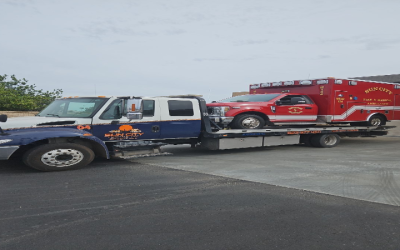
Desert Hill Towing is a family-owned towing and roadside company at 865 E Main St in Green River, Utah. Their team is available 24/7 for flat tires, jump starts, lockouts, fuel delivery, and light- and medium-duty towing. Drivers can reach them at (435) 820-0059 or find their location on Google Maps.