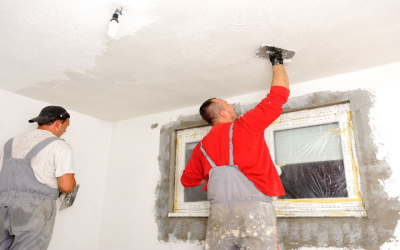
Interior walls around fixed cabinets and vanities require careful preparation and precise edge work because these permanent fixtures cannot simply be moved out of the way. The goal is to create clean transitions where the wall meets cabinetry, countertops, backsplashes, and other built-in elements without affecting adjacent surfaces.
For homeowners in Laveen, AZ, these details are especially relevant when updating kitchens, bathrooms, laundry rooms, and built-in storage areas. A well-planned home painting project considers fixed features from the beginning so they remain protected while the surrounding walls receive a consistent finish.
Why Do Fixed Cabinets and Vanities Require Extra Attention?
Unlike furniture, fixed cabinetry is part of the room’s architecture. Kitchen cabinets may meet walls along several edges, while bathroom vanities can sit directly against walls, backsplashes, mirrors, and countertops.
These intersections create narrow spaces and detailed boundaries that require greater control than an open section of drywall.
The challenge becomes more noticeable when there is a strong contrast between the wall color and the cabinets. Dark cabinetry against a light wall, for example, can make an inconsistent boundary easier to notice. Clean transitions help both surfaces appear intentional and visually distinct.
What Is Evaluated Before Work Begins?
The area where the wall meets a cabinet or vanity should be assessed before an interior update begins. Contractors may consider the condition of the drywall, existing finish, previous color, caulk lines, gaps, and nearby materials.
Countertops, cabinet faces, hardware, backsplashes, flooring, and other permanent elements also need to be accounted for.
This assessment can reveal areas that require additional attention. Older homes may have uneven transitions where cabinets meet walls, while remodeled spaces may contain several different materials within a small area.
Professional House Interior Painting takes these details into consideration as part of the overall interior project rather than treating each wall as an isolated surface.
How Are Clean Edges Created Around Cabinetry?
Clean edges depend on careful preparation and controlled application around the perimeter of fixed features.
Cabinet edges are typically straight, but the surrounding surfaces may not always be perfectly uniform. Walls can have subtle texture, corners may vary slightly, and existing transition lines may contain minor irregularities.
Professional House Painters work with the actual shape and condition of these boundaries. The objective is to establish a visually consistent transition without allowing the new wall finish to extend onto cabinet faces, countertops, or other surfaces.
Attention is particularly important around narrow spaces, upper cabinets, side panels, and areas where several materials meet.
What Happens in Tight Spaces Between Cabinets and Walls?
Some kitchens and bathrooms contain narrow strips of visible wall between cabinets, beside a refrigerator enclosure, above a backsplash, or around a vanity.
Although these areas occupy relatively little space, they can still affect the overall appearance of the room.
A narrow wall section that appears inconsistent with surrounding surfaces may stand out precisely because it is framed by cabinetry. Maintaining the same color and finish across these smaller sections helps create visual continuity.
The same principle applies to walls above cabinets. When that area remains visible, its relationship with the ceiling, cabinetry, and surrounding walls should be considered as part of the overall design.
How Do Countertops and Backsplashes Affect the Project?
Cabinets are often connected to other permanent surfaces, particularly in kitchens and bathrooms.
Countertops may include stone, quartz, laminate, tile, or other materials. Backsplashes can introduce additional grout lines, textures, and irregular edges. Bathroom vanities may also sit beneath large mirrors or beside tile surrounds.
Each material creates a different transition with the wall.
A smooth countertop edge presents a different boundary than textured tile or natural stone. Recognizing these differences helps maintain clear separation between the wall finish and the surrounding architectural materials.
Should Wall Color Coordinate With Fixed Cabinets?
Wall color does not need to match cabinetry, but the relationship between the two can influence the entire room.
Light walls paired with dark cabinets can produce strong contrast, while colors with similar undertones may create a softer appearance. Cabinet hardware, countertops, flooring, backsplashes, and natural light can further affect how the wall color is perceived.
For this reason, home painting decisions are often more effective when homeowners consider permanent features before finalizing wall colors.
Cabinetry represents a substantial visual element that is unlikely to change frequently. Selecting surrounding colors with those fixed elements in mind can help create a more cohesive interior.
What About Built-In Shelving and Other Fixed Features?
The same considerations extend beyond kitchen cabinets and bathroom vanities.
Built-in bookcases, entertainment centers, window seats, storage systems, fireplace cabinetry, and custom shelving can all create detailed wall transitions. Some installations include multiple corners, recessed sections, or narrow wall areas that require careful attention.
Considering these features as part of the room’s architecture helps ensure that walls, built-ins, trim, and other permanent elements work together visually.
Creating Cleaner Transitions Around Permanent Features
Fixed cabinets and vanities are major design elements, so the walls surrounding them deserve the same level of consideration as larger open surfaces. Clean boundaries, coordinated colors, careful protection of nearby materials, and consistent finishes all contribute to a more polished interior.
Homeowners in Laveen, AZ, planning an interior update can benefit from discussing cabinetry, vanities, backsplashes, built-ins, and other fixed features with a qualified local contractor before the project begins. Careful planning can help ensure that every visible part of the room feels connected and intentional.